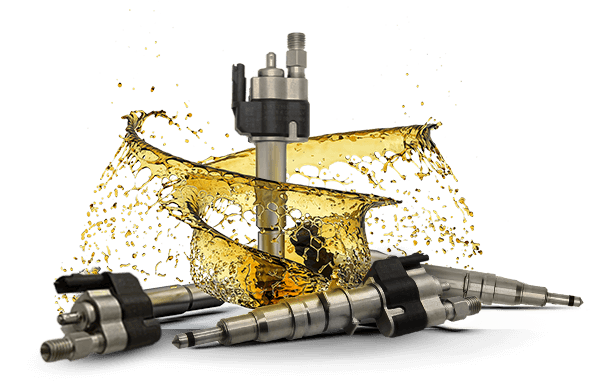
GDI Injector Testing: Why High Pressure Alone Isn't Enough
Testing a gasoline direct injection (GDI) fuel injector requires more than simply operating the injector at high pressure.
As high-pressure capability becomes available on more injector test benches, it's important to understand the difference between producing a flow measurement and actually determining whether a GDI injector is performing correctly.
A meaningful GDI test requires the correct operating pressure, defined test conditions, a part-number-specific test plan, accurate measurement, and known values against which the results can be evaluated.
High pressure is important—but it's only part of the test.
Why GDI Injector Testing Is Different
Port fuel injectors operate at relatively low fuel pressure and can be accurately evaluated using equipment designed for conventional port injection.
GDI injectors operate very differently. They deliver fuel directly into the combustion chamber at substantially higher pressures and under precisely controlled operating conditions.
Because injector performance can change with fuel pressure, pulse width, and operating point, evaluating a GDI injector requires equipment capable of reproducing the appropriate conditions for that injector.
But simply reaching GDI operating pressure doesn't answer the most important question:
Is this injector delivering the correct amount of fuel under those conditions?
A High-Pressure Flow Number Is Still Just a Number
Newer injector test benches are becoming available that can operate GDI injectors at high pressure while collecting fuel in traditional graduated cylinders.
That certainly provides a high-pressure flow measurement.
But a measurement by itself doesn't establish whether an injector passes or fails.
Suppose an injector delivers a particular quantity of fuel during a high-pressure test. To interpret that result, several additional questions have to be answered:
-
Was that the correct test pressure for that specific injector?
-
Was the correct pulse width used?
-
Was the injector operated for the correct number of injections?
-
Was it tested at the appropriate operating points?
-
How much fuel should that part number deliver under those exact conditions?
-
What is the acceptable range?
Without that reference information, the operator knows how much fuel came out but may not know whether that amount is correct.
That's an important distinction.
Part-Number-Specific Test Plans Matter
GDI injectors aren't all tested the same way.
Different injector designs and applications can require different pressures, pulse widths, operating points, and expected delivery values.
At The Injector Shop, our GDI testing uses part-number-specific OEM-style test plans whenever applicable. Rather than applying one generic flow test to every GDI injector, the test conditions are selected for the injector being evaluated.
Testing at multiple defined operating points provides considerably more information than simply running an injector at one high-pressure setting.
The resulting measurements can then be evaluated against the expected performance for that test.
That's what turns a flow measurement into useful diagnostic information.
Electronic Flow Measurement vs. Graduated Cylinders
Traditional injector flow benches commonly measure fuel by spraying into graduated cylinders. This method has been used successfully for conventional port injector testing for many years.
Our dedicated GDI equipment takes a different approach.
Fuel delivery is measured using electronic flow-meter technology rather than relying on an operator to visually determine the liquid level in a graduated cylinder.
This allows the equipment to measure injector delivery during the defined test sequence and provide recorded data for each injector.
For GDI testing, where we're evaluating injector performance at specific operating points, this measurement technology is an important part of the overall testing process.
High-Pressure Leak Testing Matters Too
Flow is only one part of GDI injector evaluation.
An injector also needs to remain sealed when it's supposed to be closed.
A GDI injector can develop an internal sealing problem that allows fuel to leak when the injector isn't being commanded to inject. Because the injector normally operates under high fuel pressure, leakage needs to be evaluated under appropriate pressure conditions as part of the test process.
Our GDI testing therefore includes high-pressure leak testing in addition to flow measurement.
Why We Clean GDI Injectors Before Flow Testing
Unlike our conventional port injector service, we do not perform a dirty before-cleaning flow test on GDI injectors.
The tip of a GDI injector is exposed directly to the combustion chamber, making carbon contamination around the nozzle and discharge area extremely common.
Testing the injector while that contamination is still present would make it more difficult to determine whether an abnormal result is caused by removable external contamination or by the injector itself.
We therefore clean the injector first and perform the complete high-pressure evaluation afterward.
The final test answers the question that matters:
How does this injector perform after service under the defined conditions for that injector?
Cleaning Does Not Guarantee an Injector Will Pass
Cleaning and testing are two different things.
Cleaning can remove contamination and restore performance when contamination is the cause of the problem. It cannot repair every failure inside a GDI injector.
Internal wear, electrical faults, mechanical damage, leakage, and flow-related failures can remain after an injector has been thoroughly cleaned.
When an injector fails one or more portions of its test plan after cleaning, that failure is important diagnostic information.
Our job isn't to make every injector receive a passing result. Our job is to determine as accurately as possible how the injector actually performs.
What Should You Ask a GDI Injector Testing Service?
If you're considering sending GDI injectors out for cleaning and testing, don't stop at asking:
“Do you test them at high pressure?”
That's a good starting point, but today there's a more important set of questions to ask:
-
Is the injector tested using a part-number-specific test plan?
-
Are the correct fuel pressures, pulse widths, and operating points used?
-
Are the measured results compared with known test parameters and acceptable limits?
-
Is fuel delivery measured using electronic flow-meter technology, or visually read from graduated cylinders?
-
Is high-pressure leak testing included?
-
Will you receive individual documented test results showing how each injector performed?
High-pressure capability is important. But the pressure itself doesn't tell you whether an injector is good.
A high-pressure flow number is still just a number unless you know what that injector is supposed to deliver under those exact test conditions.
Professional GDI Injector Cleaning & Testing
The Injector Shop has specialized in gasoline fuel injection since 1990.
Our professional mail-in GDI service combines ultrasonic cleaning with dedicated high-pressure testing, part-number-specific OEM-style test plans, electronic flow measurement, leak testing, and individual documented results.
The goal is simple: provide meaningful information about the actual condition and performance of each injector so you can make an informed decision about putting it back into service.
Learn more about our High-Pressure GDI Injector Cleaning & Flow Testing service.